

Qualitative research is an excellent way to explore mindsets, perceptions, and the decision-making process of participants. Whether it is with a focus group, an online bulletin board, or an in-depth interview (IDI) by phone, qualitative research is often the best type of methodology to use for many purposes rather than a quantitative study.
We often recommend qualitative research for:

While market research firms conduct professional qualitative research for clients, many companies and organizations sometimes conduct their own or have their marketing agencies take this work on. This guide is intended to help anyone involved in qualitative research execute the highest quality research possible.
Qualitative research projects are only as good as the participants you recruit to be involved in them. Because you are conducting the research with a smaller group of people, it is vital you identify and recruit the right mix.
Organizations often work with qualitative recruitment firms to qualify and secure participants for their upcoming focus groups, IDIs, or web interviews. These firms specialize in not only finding the right recruits for the study at hand, but they are often experts at maximizing engagement and minimizing no-shows. Firms often have proprietary lists of panel members to make the recruitment process run smoothly and be cost efficient. Even when their panels don’t meet the current studies’ needs, they usually have the expertise to reach out to known partner panels or to recruit from other sources.
Need help with recruiting? Contact us today!
If you are going to take this work on yourself, there are nine basic steps to recruiting any qualitative study.
The most important decisions you will make with qualitative research are in relation to your sampling – who should be in the interviews, online discussions, or focus groups. For example, if you are conducting employee interviews or small groups, does every department or office need to be represented? If you are looking for customer insights, will it be more enlightening to talk with loyal customers, new customers, lapsed customers, or all of these?
For any type of group, how you compose the groups can be critical to your research success. If the topics include sensitive health topics, we often hold homogenous groups by gender, age, or a combination of both. If you are looking to gain competitive insights, will it work better to segregate groups by preferred brand or mix people up? When we conduct groups of employees, we almost always separate top management, supervisors, and line staff.

Think carefully about your topics, the market environment, psychological factors, and your research goals. Then you will make solid decisions regarding your sampling and research design.
Always consider your target audience. Are they likely to answer their phone, especially if it’s an unknown number? It’s unlikely. So unless you’ve budgeted time to leave messages, blind calling is unlikely to produce good results. This is one of the many reason call-centers are no longer the go-to recruiting option for most studies.
Is your audience active on social media? Probably. But which social media? For different audiences, you can recruit on LinkedIn, Facebook, and Instagram—and understanding how and when to use each of these (and others) is important. Facebook and Twitter can be quite effective when recruiting B2C, whereas you’ll likely get much better B2B results if you use LinkedIn, though Facebook’s wealth of information and audience-targeting features can also be helpful for some B2B studies.

For B2C studies, we’ve found great results by targeting ages, geographic regions, genders, and interests on Facebook and Instagram, asking those possibly interested in paid research about “X” to click through and take a short screening survey (more on those later). Often for a few dollars per recruit, Facebook will deliver many qualified applicants. While the upside is cost savings, the downside is quality; if recruiting through Facebook, you will need to spend more time vetting to ensure participants are authentic and qualified and reminding your recruits to ensure they show up.
For B2B studies, we’ve found great results by targeting and InMailing specific profiles. This has worked exceedingly well for recruiting people with unique jobs or who work in unique industries, as well as for recruiting those with high-status or high-paying jobs (C-Suite, VPs, directors). We’ve also seen results by joining Facebook interest groups. Is the target audience parents of school-aged children in “County X”? Well, there’s probably multiple PTOs and PTAs in that county with Facebook groups. Messaging those groups and asking to post the opportunity can net overnight full recruits.
Another strategy when you have time is to roll recruit. You can ask your first participants to sign up to refer others or give them a link to the screening survey to share with their friends, colleagues, or groups they belong to. This worked for us when we had to recruit flight dispatchers – they are almost impossible to reach by email or phone, but we made our quota by patiently working referrals. One point to remember with roll recruiting, however, is to make sure you don’t end up with multiple participants from the same company or the same family in your focus group or interviews. It can affect the dynamics of a group or bias the insights towards one perspective.
When you have time, it can also be effective to connect with organizations that have a relationship with the type of participant you seek. If you need to speak with young voters, connect with college political and social issues groups. If you want human resources managers in your research, reach out to state or national HR associations to see if you can get a notice in their next newsletter or buy a digital ad on their site. We conducted focus groups about food insecurity among seniors by working with senior citizen centers and offering each one a donation for hosting their groups.
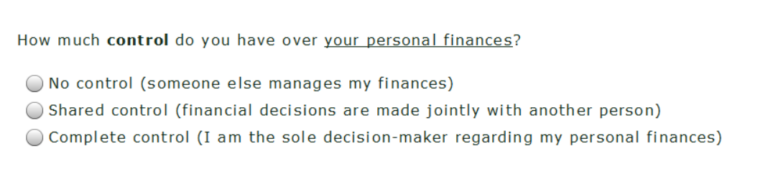
After you have identified how you plan to contact your potential participants, the next step is designing a survey with screening criteria. This is how you identify who you want to recruit for your study. Give very careful thought to what is included in the screening survey.
For example, let’s say your study is about the wine-drinking habits of parents in the Denver area. To recruit them, you’ll need to ask questions on age (disqualifying anyone under 21), children (disqualifying anyone without children living with them at least 50% of the time), and location (disqualifying anyone not living in the Denver metropolitan area).
Ah, but is that enough? Not quite! A lot of first-time researchers will forget a very important criteria: do the recruits drink wine? More than that, how often? What varietals? These might all be important questions to know (and to qualify and disqualify participants on) prior to the focus groups.
Surely that’s enough, though, right? Probably not! Do you want all men in the group? Do you want the group to be entirely of one ethnicity? Do you want a mix of ages, or do you want to keep the group to just those under 40? Do you only want new parents? Only parents of teenagers? You probably don’t want anyone who works at a brewery or winery in the group, but do you want to disqualify bartenders? What about restaurant staff? Where do you draw these lines?
The same type of questions apply to a B2B recruit. It can be very helpful to consult with a trained, qualified research professional to define exactly what questions to ask, how to ask those questions, and who you ultimately want in your focus group.
When you know what questions you want to ask and what order you want to ask them in, put them in a single document. In that document, clearly note which answers to which questions will disqualify people from the study. Finally, make sure any stakeholders who need to see that document sign off on it. They will likely think of some screening questions you did not. Transparency and agreement at each step will lead to happier outcomes for all in the end.

After you have the screening survey finalized, your next step is to program it online. This allows people to take it easily, and allows you to send it to people (and send people to it) in a variety of ways. Additionally, if you are using a call center for your recruiting, it can be used for computer-assisted telephone interviewing (CATI).
One of the main benefits of an online (as opposed to paper) screening tool is that it handles all of the skip logic in a screening survey. What’s skip logic? Well, let’s continue to use the Denver wine-drinking parents example. Assume you want to know each potential recruit’s favorite varietals. You might first ask them if they like red wine, white wine, or both. If they say just red wine, you would ask them what red varietals they prefer, but you would skip a similar follow-up question about white varietals.
A human recruiter using a pen-and-paper screening tool has to follow this logic, and may (okay, to be honest, will) make occasional mistakes. Realizing you accidentally allowed someone into a study you shouldn’t have—or accidentally excluded someone you desperately needed—is not a good feeling. Programmed screening surveys eliminate recruiter-based screening mistakes, even when utilizing CATI.
After you’ve programmed your screening survey, you should test it. Test every qualifying question, every disqualifying question, and every piece of skip logic. Every possible path through the screening survey should be tested at least once. This can be tedious and time-consuming, but skilled qualitative recruiters will tell you: it’s essential. Without these tests, you can make the same dreaded recruiter-based screening mistakes, only now those mistakes would be systematic. What’s worse than realizing you accidentally screened out one person because of a mistake? That’s easy: realizing you accidentally screened out dozens because of one mistake in the programming!
Now that you have your audience selected and your screening tool developed, programmed, and tested, it’s finally time to invite that audience to take the screening tool. But how? Well, that depends on the audience.
Are you using a panel? Great! Those are people who’ve already opted in to receive research opportunities. They require less persuading to take screening surveys, and they are likely to respond more quickly than the general population.
Are you recruiting with an ad on social media? Great! You have access to so many more people than are on a panel, but you have to make sure you reach them. Not only does your targeting have to be spot on, but you have to make sure you snag their interest through a mixture of eye-catching graphics, an interesting headline, and a quick message. If you’ve never recruited this way before, it can take a while to dial in on exactly what works. Luckily, you’ll get a trove of analytics from the social media platform you’re using to help you. Running multiple ads to see which is most effective is a great basic strategy; after a few days, only run the ads that are working best.
Are you recruiting with direct messages or emails? Great! You have more opportunity to tailor your message to your intended audience, and your intended audience—if they read your message—has more opportunity than any other avenue to respond directly back to you if they have any questions or concerns about the study. If you are working from a list with multiple known variables about each person (title, first name, last name, company they work for), those variables can be worked into the invitation to increase its personalization. Be careful, though! Some people may want to know how you know so much about them if they’ve never heard from you before, and there may also be CAN-SPAM ramifications to consider. Professional research and recruiting firms have many policies and practices in place to make sure they do not spam or harass potential recruits. Looking to them for assistance might be in your best interests if you don’t want your email (or your company’s domain) blocked by the people you need to speak to most.

Finally! This is the exciting part! No, really! You see who took the screening survey, who made it through, and pick who you want to participate. It can be really fun.
But… it can also be not-so-fun for a variety of reasons.
First, you may not have enough potential participants in your pool of prospects, meaning you need to spend more time (and probably money) recruiting. If you’ve already spent your recruiting budget, this can be an issue. For this reason, try to never spend your entire recruiting budget upfront. Always assume that recruiting is going to take a few iterations. If you got it done in one try, great! But if you didn’t, that’s okay, too: you planned for the extra steps.
Second, you may not have the right mix of people. Maybe you need 20 male wine drinkers and 20 female wine drinkers, but your recruitment efforts netted you just 10 male wine drinkers and over 100 female wine drinkers. You still need more males. That’s the bad news. But there’s also good news: you can modify your screening survey to disqualify females, and you can re-target your recruiting efforts to only males. If you have a list where gender is known, or you’re advertising on social media, you can save time and money on the back half of your recruiting efforts. Silver lining!
Third, you may have a good-sized pool, but do you have enough people who will be good participants? This is primarily a concern when recruiting for focus groups; how do you know if your potential recruits will contribute and share, and conversely, how do you know they won’t monopolize the conversation? One good way is to ask an open-ended question in the screening survey. Based on their responses, you may be able to get a sense for how eloquent and/or opinionated your prospective recruits are. Another simple step is to ask a question like “Do you feel comfortable sharing your opinions in front of others?” in the screening survey. You’d be surprised, but there are people who apply to focus groups who answer “No” to that question.

When you do have the right mix of enough good potential participants, select the ones you want in your study, and make what is called a “grid”—basically a spreadsheet or table of their names, demographics, and other relevant information from the screening survey. This is another document where it is crucial that key stakeholders see it and sign off. If everyone agrees that these are the participants you want, it’s time to reach out and schedule them.
Each potential participant now needs to be contacted to confirm their interest, availability, and intent to participate.
For focus groups, you will save yourself a lot of time and headaches if you decide when and where groups will be held at the start of the project and put that information in the screening survey. Panelists and the general public appreciate not having their time wasted, so on the first page of the screening survey, say something akin to, “These focus groups will be held on the afternoon and evening of Tuesday, February 22.” In addition to this, it is common practice to have a question in the screening survey where the potential participants must confirm their availability. You’ll still have some people, upon contact to schedule and confirm, tell you they’re not available during that time—but you’ll have far less if you screen for it.
We have found the most successful approach to confirming interest, availability, and intent is to send progressive waves of communication. The process varies slight for groups versus IDIs, so we’ll go over the process for focus groups first:
For IDIs and similar projects:
If your project doesn’t accommodate this amount of time between communication waves, you can condense—but try to plan projects that accommodate at least this amount of time. Or hire a professional research firm that is used to this process to recruit for you.
A word about interview times – if your research is individual interviews, try to offer options for evenings and weekends instead of limiting interviews to business hours only. This will help ensure you attract a broad mix of participants and not just people who have the ability to free up time during the day.
It may seem like overkill, but remind your participants three times.
For IDIs with professionals, this can be done with (1) a calendar invitation with (2) a reminder built into the calendar invitation, and (3) an email reminder the day before or morning of the interview.
For IDIs with consumers, we suggest (1) an email 2-3 days before the interview, (2) an email the day before or morning of the interview, and (3) a text message the day before or morning of the interview.
For focus groups, we suggest (1) an email 2-3 days before the session, (2) an email the day before or morning of the session, and (3) a text message the day before or morning of the session.
If you follow these guidelines, as well as the recruiting procedures outlined in previous steps, you should feel confident that your show rate will be above 95%.

Gratitude – it costs so little to do, but its value cannot be overstated. After your participants have completed their session or interview, send a thank you email. Personalize it, if possible. For panelists, it will improve their esteem of the panel. For IDI and focus group participants, it will be another reason to remember the name of and say good things about your organization. Some of those high-level IDIs may someday have a need for your services or products, and maybe they’ll remember you and what a good job you did.
One of the main decisions you will need to make if conducting in-person research is the place. If conducting groups, you can hold them at a professional focus group facility, a rented venue such as a hotel conference room or a library community room, or a room provided by you, your client, or the participant. Individual interviews are often held at the participant’s place of business or home.
Your choice of venue should be guided most by your participants’ comfort level with the environment and their ability to get there. As examples, parents of teens may be leery of allowing them to participate in research held at a hotel, low-income participants may need a place close to public transportation, and employees of a company may be more willing to share honest feedback in a setting away from their offices.

Other factors to consider in choosing a venue include budget, privacy, technology presentation needs, accessibility, food service, availability of observation rooms, and parking.
Whether conducting a 15-minute phone interview or 2-hour live focus group, the participant experience matters. The experience of a market research participant will always impact the quality of data, and with a greater participant experience comes better quality data. Better quality data means more reliable insights to feed into decisions. Always try to collect better quality data by creating the best participant experience possible.
There are three things you must do to accomplish that goal: provide an incentive, establish trust, and make the research engaging.
To motivate participation, you want to give your target audience an incentive to provide their opinions and feedback. A reward for participating in market research can be a monetary incentive, but it can also be as simple as feeling as though their input made an impact on the findings.
Not only does offering an incentive for participating in market research allow for a better experience, but it can also lead to shorter and cheaper fees for recruitment. For most studies, especially B2C studies, a monetary reward will be the most effective. There will be times, especially in some B2B spaces, where participants won’t be allowed to accept monetary rewards. In those cases, you can offer to make a donation in their name to a charity of their choice. This has worked wonders when recruiting C-Suite individuals whose time is very valuable – often worth more per hour than most project budgets can afford.
Choosing the reward for participation in marketing research is dependent on several different factors: how wide or narrow the audience is, how much the audience’s time is worth, how much time the participant needs to contribute to the project, the topic being discussed, the location of the target audience, the industry expectations for research rewards, and more.
Small increases and decreases in incentive levels can quickly add up to thousands of dollars. If new to the qualitative research space, look to an experienced firm to provide guidance on incentive levels as offering too little will negatively impact your recruiting time and offering too much will cost your project more than necessary.
People are constantly being asked to fill out surveys about their thoughts and opinions. But that’s quantitative data. You’re doing qualitative research because you need a deeper understanding of those thoughts and opinions. You need to understand people’s deeper feelings and emotions. You need to know them, and that takes a relationship—and relationships require trust.
You can begin to establish trust even before the research conversation begins. In all emails, let participants know they should respond if they have any questions or concerns. At the top of the conversation, explain exactly what the topics being discussed will be, and—if possible—who the research is for and to what end they are conducting it. Always say who you are, and tell them a little bit about yourself—and always ask them something about them that has nothing to do with the research, just to break the ice and get to know them better as people. In short: be the type of person with whom anyone would be happy to have a discussion.

Here is partial list of fun activities that work for focus groups, interviews, or both, depending on the method and the topic of the research:
And always feel free to crack an appropriate joke or make a silly reference if the conversation allows for it. You’re a person, and so are they. It’s okay to acknowledge that fact. Just be sure that your humor will not make anyone uncomfortable.

Typically, focus groups invite 10 to 12 people to participate in a discussion about a single topic, often for 90 minutes to 2 hours. Moderating a focus group is both a skill and an art. It can be difficult to run a good room and get good data, especially if you’ve never moderated before. Luckily, we’ve got a basic set of 15 things to tell your participants that will help you establish the rules of the room, build trust, and hopefully engage everyone from the start.
It seems like a lot to go over, but a practiced moderator can go over the ground rules in 3-4 minutes, laying the foundation for a well-run group and a positive experience for everyone involved. As a bonus, though these 15 instructions were designed for in-person focus groups, you can easily modify them for online focus groups, IDIs, dyads, triads, product observations, and more.
Now that you invested all that effort in planning and conducting the research, the same level of attention needs to be spent in the analysis of the research. The key place to start is by having the recordings professionally transcribed. Trying to analyze from notes or by listening to digital recordings creates an opportunity for bias or missing key findings.
At our firm, we use a three-pass approach where the analyst reads the transcripts once to get a feel for the full input, a second time for identifying common themes in the transcripts, and a third time to carefully code and tabulate all the comments and activities. This scientific process is much more reliable than going by memory or by watching recordings. It will identify the findings and how representative each one is of the full sample. There are software options that can help automate some of this process if you don’t have time to do the labor yourself.
Once you have the findings identified, you can choose relevant participant comments that provide nuance, emphasis, and flavor. If you have the transcripts time-coded, you can go back and lift actual audio or video clips to add to your presentation. It really brings the insights to life.
While it may not be possible with your available resources, it is ideal if the person who conducted the interviews or moderated the focus groups also analyzes the transcripts. They will have the memory of the emotions and emphases that participants conveyed. The combination of this recall and the transcripts will provide the richest and most precise interpretation.
Of course, you will want to share the results of the qualitative research with others in your organization or with your client. There are many ways to report findings, from a comprehensive Word document that includes methodology, all findings, and lots of verbatim comments to a concise PowerPoint presentation with a few video or audio clips. Whatever format you choose, sprinkle in lots of quotes to make an impact.

Whether you have a question about process, need assistance with recruiting or analysis, or want a firm to execute the full study, lean on our team’s expertise. Our qualitative research experience is deep with experience in individual in-depth interviews, dyads, triads, and focus groups both online and in person. for for-profit companies, non-profit organizations, and government agencies that has included everything from a handful of interviews to dozens of focus groups in both consumer and B2B markets.